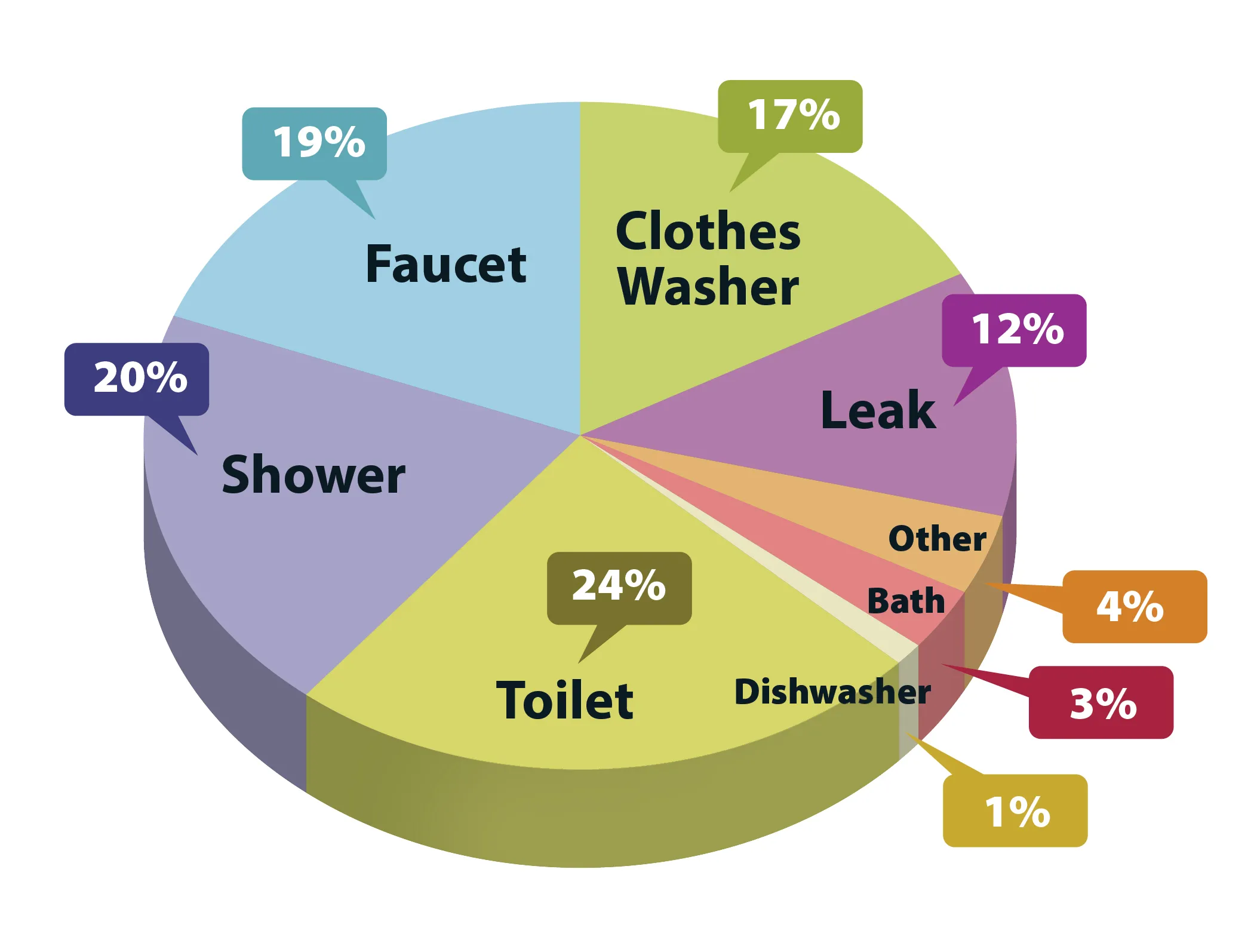
Did you know that a leaking toilet can waste up to 2,700 gallons of water a month? Have you checked your toilet lately?

Find out how your water use compares to average water use in our region.

Free workshop March 5 for landscape professionals that covers best management practices for designing, constructing and maintaining waterwise landscapes.
More details

Conserving water is good for the environment, for wildlife and for our future. And saving water isn’t difficult. All it takes is a little awareness and know-how to conserve hundreds of gallons of water each month — or even each week.
Just how important is water conservation? Consider these facts:
- A leaking toilet can waste up to 2,700 gallons of water a month
- Most gardens could thrive with 25%–40% less water
- One small leak from a faucet can waste 50 gallons of water a day
We've compiled these handy tips to help you save water throughout your home, both indoors and out.

Shower
- Shorten each shower by five minutes — you’ll save up to 25 gallons per shower.
- Install a low-flow showerhead, and you can save 12 gallons every five minutes.
- Collect water that runs until the shower gets hot, and use it to water plants.
Bathroom
- Save 18 gallons of water every time you take a bath by filling your bathtub halfway.
- Save more than 3 gallons every time you flush by installing a low-flow toilet.
- Avoid costly toilet leaks! Check out leak tips for ways to check for and fix leaks.
Sink
- Turn the water off while you’re using the sink — you’ll save up to 20 gallons per use.
- Replace older bathroom faucet nozzles (aerators) with new ones rated at 1.0 gallons per minute (gpm), or less. Aerators cost only a few dollars.
Dishwasher
- Install Energy Star-approved dishwashers, which can save an average of 5 gallons of water per load, or 792 gallons per year!
- Use a dishwasher. The average dishwasher uses about 10 gallons of water per load, compared to 16 gallons when washed by hand. Newer, efficient dishwashers are even better: They use as little as 5 gallons per cycle, which means they also consume less energy to heat the water.
- Wait to run your dishwasher until you have a full load.
- Run the dishwasher one less time per week to save an average of 10-15 gallons of water.
- Don't pre-rinse dishes. Most newer dishwashers don't require pre-rinsing.
Sink
- Re-use the water from washing your vegetables or boiling eggs to water your plants.
- Keep drinking water in the refrigerator instead of running the faucet to get cold water.
- Make sure your faucet has an aerator installed, which can save up to 13% in daily faucet water use.
- Avoid wasting water waiting for it to get hot. Capture it for other uses such as plant watering or heat it on the stove or in a microwave.
- Avoid using running water to thaw meat or other frozen foods. Defrost food overnight in the refrigerator or use the defrost setting on your microwave oven.
- Garbage disposals require a lot of water to operate properly. Start a compost pile instead.
- Soak your pots and pans instead of letting the water run while you scrape them.
- When washing dishes by hand, fill one sink with wash water and the other with rinse water.

Clothes Washer
- Install an Energy Star-approved washing machine. Average washers use up to 55 gallons of water per load, compared to as little as 20 gallons for Energy Star-approved models.
- Run the clothes washer one less time per week — you’ll save up 35 gallons of water.
- Save water by running the washer ONLY when you have a full load of laundry to do.