The greatest waste of water is watering too much, too often. In the Portland metro area, our water use is highest during the summer months – often doubling or tripling - due to outdoor watering.
Oftentimes this is because people don’t know how much water their landscape needs. It’s one reason why outdoor watering, from garden hoses to in-ground sprinkler systems, is key to saving water outdoors.
Can I water efficiently by hand?
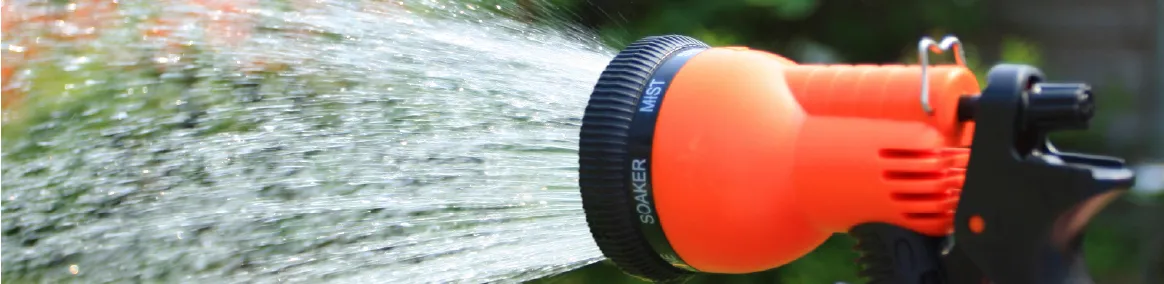
Yes! Watering by hand allows you to target where and how much you water. For example, you can “spot water” plants that need a little more water between regularly-scheduled watering times. Adding a hose nozzle to the end of your hose will allow you to control the flow so that the water is only on when you need it.
How much should I water my grass, garden, or landscape?
Water your grass, garden, or landscape based on your site conditions and your plants' water needs. During the watering season, check the Weekly Watering Number to get weekly recommendations based on your local weather conditions.
Lawns typically need an average of one inch of water per week.
Vegetable gardens often need about the same amount of water or more than lawns each week.
Many established trees, shrubs, and perennials don’t need to be watered as much or as frequently as lawns do in order to thrive. Check with your local garden center or landscape professional to learn about your plants' specific water needs.
What time of day should I water my garden or landscape?
You should water your garden or landscape before 10 a.m. or after 6 p.m. when temperatures are cooler and the air is calmer so that less water evaporates.
How often should I water my garden or landscape?
We recommend watering established landscapes on average twice a week rather than every day. Your goal is to water less often and deeply so that your soil is damp several inches down. This will help roots grow deeper, resulting in more water–efficient, drought–tolerant plants. Newer plantings, vegetables, and potted plants are likely to need more frequent watering.
What do I do if runoff or puddling occurs while watering my garden or landscape?
Short answer: Stagger your watering.
In the Pacific Northwest, many soils are hard and dense (clay) which may take water longer to seep into them. If this is the case with the soil in your yard, you may have to adjust your watering schedule. This will help you apply the amount of water that your soil can absorb each time that you water. Runoff and puddling mean that you are watering too fast for your soil to absorb it.
If this occurs, you may want to stagger your watering schedule by using a “cycle and soak” pattern. To do this, water in several short sessions rather than one longer session each watering day. This will give the water time to soak into the soil between watering sessions.
For example, if you water a total of 40 minutes per week, you can use a schedule like the one below:
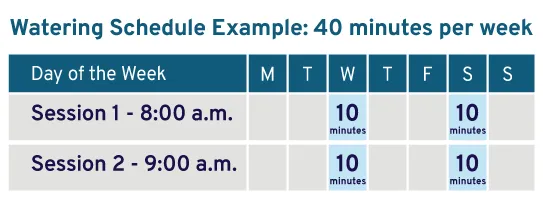
The number of minutes per session should equal the number of minutes before runoff occurs. This should give your soil a better chance of absorbing the water and reduce runoff.
Adjust the amount you water throughout the summer
One of the best ways to water efficiently during the summer is to adjust the amount you water. This means watering more when it is hot and dry, and less when it is cooler and wet. This little bit of extra effort will save water and money however you water your yard.
Find out how to measure your water use with these easy step-by-step instructions. If you have an automatic irrigation system, you can use this information to program your sprinklers. Use the Weekly Watering Number as a guide for how much to water –throughout the watering season.
How do I make sure my watering system is efficient?
If you’re updating your yard or starting over with a completely new design, watering efficiently should be a top consideration for you or your contractor. Here are some top tips to help you be water wise:
- Install drip or micro-irrigation for flower beds, shrubs, and trees
- Use a weather-based irrigation controller (or “smart controller”) or rain sensor to make sure you’re watering according to hyperlocal weather conditions
- Design your watering system with different zones based on plants that need similar amounts of water, for example, separate your lawn and flowers into different zones
- Make sure your sprinklers are set up to water uniformly across your yard to avoid over- or under-watering